Friday, September 2, 2011

More Eggs and Ducks


Taggles - 50D

Ok Urbanites! Quick foreword for this blog post. If you follow the link, you will go to some more mature content. Parents should follow the link first and then use discretion to determine if their children are ready to see it. Now to the Blog...

We are making bunches of eggs now We have been getting between 5 and 8 eggs a day. On hotter days we get lower numbers and on cooler days we get higher numbers. One day we got 12, yes TWELVE eggs!!! They were laying in possibly the worst spot for us to get to them, under the duck house. Shortly, I will attempt some explination.

There is a tree keeping us from putting the house flush with the fence. The eggs were behind the tree and behind the fence so we could barely reach them. below is a photo.

Eggs from under Duck House-Cell Phone

You must know that chickens will lay where chickens will lay. We place faux eggs in nest box and keep it padded and fluffy, but we still have them lay under the duck house, in the duck house, in the chicken coop in the wrong side, and have even found them in the middle of the run.

Now we are about to make money on the eggs... About time.

As for the ducks, Waggles and Taggles, where do I begin? We havent gotten an egg from Taggles yet. While I was at work, Gen said that she saw what seemed to be, Waggles drowning Taggles in the pool! Upon further visual, she realized that Waggles was enjoying himself, a little Taggles. Of course, she had her phone on her and caught this on video! This video is what the warning was about, even though it doesn't really show anything.


I guess we will be getting an egg soon, although we will not eat it.

Friday, August 26, 2011

Update: Chicken Little

Buff Orphington on Windfield Acre

This is an update to our post, "Chicken Little." In that post I showed concern that one of our Buff's were a rooster, not a hen, which was a concern here in the city. In that post I said:

"I will keep you up to date, but we have a Buff Orphington that is growing a larger comb and waddle than all the other chickens. If this is the case I will be making a decision. First we wait until the first crow to truly find out."

Well, it is NOT so! Yay! Gen thought that the Buff may be brooding, so we were hopeful that it was a hen. It also didn't have the feathers of a rooster. Well, she was not brooding, but the was laying an egg for us. We are so happy that every single chicken turned out to be hens.
Buff Orphington on Windfield Acre

We are still 2 weeks ahead of schedule for the hens to lay eggs, but we now have three (i believe) producing. Our Araucana is laying almost consistently double yoked eggs. The last one was SOOO BIG that we couldn't shut the egg carton. Poor girl, must have gotten hurt on that one.
Photo: Egg Comparison taken on cell phone.

I have been bagging the majority of the grass that I have been mowing in the yard each week because bugs come with it. I dump at least 3-4 bags of grass in the pen each time I mow. Grass fed chickens are healthier and happier. This means that our eggs are richer and healthier.

They flock to us now when we feed them worms (we have a meal worm garden... another post perhaps). Most of them will let us pick them up, except the roosterhen. She tries to peck at us if we do, but she is letting us get pretty close.

All of the eggs started off small and got bigger. So if you get small eggs at first, don't worry, you will get more egg for your buck soon enough. That's enough posting for one day.

Later Urbanites!!!Link

Wednesday, August 17, 2011

Worm Farm


We love to have happy chickens almost as much as we love to have healthy chickens. They produce more quantity and quality eggs this way. One aspect of that is giving them meal worms to eat. The chickies love the meal worms.

Meal worms get pretty expensive though. How do we correct this? Grow our own! We had a friend give us some for a starter and we have them in wheat germ instead of dirt. about once a week or so, we have to give them another potato, cut in half, for food.

I never saw this until just now, but there is a website that tells you how to grow mealworms right here at eFinch.com.

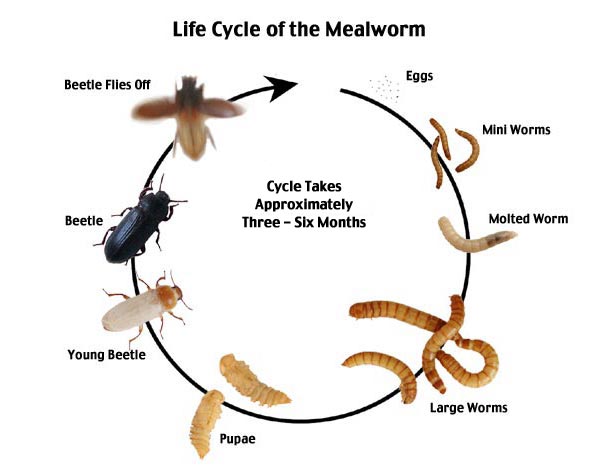
The worms grow into beetles, which lay more worms. Then the worms eat the beetles and potatoes. As long as we keep them stocked with germ and potatoes, they will thrive and grow in number.

When we want to give them to the chickens, we take a small cup of worms (wheat germ and all) out to them. Then we replace the cup with a cup of clean germ. Then they keep their numbers up.

The only problem is to how much we are going to need to self sustain for us to give them to chickens and ducks every day.

Later Urbanites!

Friday, August 12, 2011

Thumper has no more ear mites!

I have posted to you guys about our rabbits already. Thumper (male) and Nibbles (female) came to us in poor shape. This was not at fault to the owners, they were just sick. Thumper had ear mites and neither rabbit would eat or drink much. after some TLC and lots of organic veggies from our garden, they are both eating, drinking and pooping just enough.

Thumpers ear mites were really bad. Sorry that I dont have a picture of that, but I have one of his ears today. THE EAR MITES ARE NOW GONE. What did we do?

We did NOT use actual medication. We used coconut oil in an old dropper bottle. We placed it in his ear, which he did NOT like at all. Then we massaged it around all over his ear. After a couple of weeks, the mites were all gone. Yay!

Photo: Ear Mites Gone (taken by cell phone)

Photo: Ear Mites Gone 2 (taken by cell phone)

Later Urbanites!

On the Urban Farm

Photo: Two Eggs in morning (taken by cell phone)

Ok, urbanites, for about a week or two now, we have had two of our chickens laying just shy of an egg a day. They are YUMMY! The children keep asking us for egg sandwiches, so we actually are not producing enough eggs yet. One of the eggs (off-white one) is from our dark colored Araucana and the brown one is from our buff, we think. So it seems that 2-3 hens would be a good amount to have for a family of four. Not to mention that the two that are producing are actually 3 weeks ahead of schedule! I have a feeling that production will increase.

The buff that we thought was a rooster in a previous post doesn't seem to be a rooster anymore. Alot of the other hens are starting to get combs and waddles just like her. I know people with roosters quite younger than our buff is and they are already crowing. Our buff is not.

We went for several days not thinking that the hens were producing. It turns out, when I opened the coop for cleaning that they had started laying their eggs in the far corner AWAY from the nesting boxes. We have began to place plastic eggs into the nesting boxes and our chickens keep kicking them out, lol.

This morning, I did have the araucana lay in the box and the buff lay in the corner. As I found on the BackYard Chickens Forum, I will start locking them up at night in the coop and let them out a little later. There doesn't seem to be much else I can do except ensure that the children stop lifting the lid to the nest boxes.

Only time will tell. Good news, we are now at a point that we are not buying eggs from store or other farmers anymore. Better news, we are going to be at a point of making money! It will be a while for that though.

Later Urbanites!

Monday, August 1, 2011

Our New Zealand White Rabbits and PVC Hutch


Alright, so we have chickens, ducks, and a garden. The obvious next step is rabbits.

We just picked up two rabbits (New Zealand White), six cages, a small bag of feed and some medicine for one of the rabbits... all for just 10 dollars!!! This was given to us by a family in a facebook group called, "Alternamoms." The female (Nibbles) had a saggy bottom, and the male (Thumper) had ear mites. The medicine was for the ear mites. Wow, WHAT A DEAL!

First order of business, I built a hutch/cage stand out of 1 1/2 inch Schedule 40 PVC. This turned out to be pretty nice after I was finished. Check the video below to see the setup. The reason for PVC is that it would stay cleaner and would not be susceptible to rot or germ harboring. Cleaning consists of hosing it down.


Video: Rabbit Hutch (taken on cell phone). You must be able to watch You Tube Videos.

This PVC hutch was the result of a modification that I made to someone else's design. I found his design on http://www.raising-rabbits.com/rabbit-hutch.html. I hang my rabbit cages from 1/2 inch conduit.

Second order of business is this dang heat! It has been in the hundreds here, so I have been forced to learn about how rabbits cope with the heat (that is they don't at all). I have learned to place their treats in the freezer, place tile below them (which has the double purpose of allowing their feet to rest off of the cage bottom), and fill soda bottles in the freezer to place in cages where the rabbits will lean against it and keep cool. Their ears are their most efficient method for cooling off. Some people spritz cool water on them, but this is a risky means to cool them off. When we first got them, we were a little shaken, because the male was a little lethargic, however he has recovered with a little of our TLC. His ear mites are biting the dust as well.

The rabbits that we have are going to be the mating pair, since they are too old to provide meant anyways. Their children will be the meat producers, unless we choose to generate another mating pair. My ultimate goal in any of our productions is to have too much available, so we can either make some extra cash off of them or to help others. I know that we will be able to use their hide, but I am not sure what for yet. Hope today was informative.

Later Urbanites!

Wednesday, July 27, 2011

Rotten Sqash


We have many squash plants. We had a couple of them get really large. Well with two of our plants, we had a little mishap.

Our squash plants rotted at the main stalk! One of them was our best squash producer. They just started dying and the limbs were breaking on them.

When I was doing some work in the garden, I cleaned the squash plants out. Both of them came right out. The whole plant came out all the way, including the main stalk. It was rotten on the bottom. What in the world happened!?

I did a little reading and this is what I think it is: squash vine borers. The adult is a large black wasp with an orange ring around the abdomen. She lays eggs inside the upper stem and the larvae eat their way and grow as they move toward the crown. Eventually the crown is a pulpy mess and the vine dies. They do not sting, they are really a moth that flies in the daytime.

What in the world do we do to stop them??? After digging up some info, I found this information on Gardens Alive:

That’s easy, dress up like a butternut squash! Those vines’ solid stems terrify this parasite of pumpkins, zapper of zucchini and spoiler of squash!

This is an especially nasty pest because the ‘borer’, a grubby white caterpillar, hides inside the hollow vines of popular squash-family plants like pumpkins and zucchini as it does its dirty work. Gardeners generally don’t notice anything is wrong until the whole plant starts wilting, and by then, it’s generally too late. So we will focus here on prevention; don’t blame us if you end up with too much zucchini.

The problem begins in late Spring, when a moth lays its eggs at the base of your squash plants. Each female will lay about 200 eggs, but one at a time rather than in clusters, making the tiny eggs (a mere 1/25 of an inch long) almost impossible to spot. They hatch in a week or two, and the little caterpillars that emerge quickly tunnel into the hollow plant stems their eggs were so cleverly attached to. The caterpillars feed, hidden from view, for a month or so and then drop down into the soil to pupate. In the North, they emerge as adults the following Spring. Down in Manuel’s Texas, the first run pupates quickly into adults, whose children commit another round of squash vine damage before they drop down into the soil for the winter.

That’s means they’re in your soil right NOW. If you had borer damage last year, you probably have hibernating baby borers lurking in your dirt; just like the pods in Invasion of the Body Snatchers (don’t fall asleep in the garden!). Before you plant anything this season, use a hoe to cultivate the soil where your squash grew last year; look for cocoons an inch or so deep. If you find some, well…just make sure no one is watching and try not to sound too much like The Joker after he’s captured Robin the Boy Hostage again.

One way to avoid the adult moth—which looks like a little red-bellied wasp—is to cover your squash plants with floating row covers; these spun polyester fabric blankets (best know brand name: Reemay) allow water, light and air through, but prevent bugs of all kinds—including bees, which is a problem. If you go this route, make sure you plant where squash didn’t grow the previous year (or the moth may emerge inside the row covers—eeek!) and either grow self-pollinating varieties or lift the covers and pollinate the flowers yourself with a little paintbrush. In one-generation climes, you can remove the covers entirely by the Fourth of July; all the egg-laying action will be over.

An interesting variation on this technique is to cut little pieces of row cover and use them to just wrap the vine itself. Do this before you plant, so that the covered section of the vine extends below the soil line; and add more wrapping as the vine grows larger.

But the most reliable cure may be to grow your squash out in the open and use vigilance to get the eggs. You may not be able to see them, but a weekly spray of the vine with insecticidal soap will smother them nonetheless (use a commercial product, not home-made; there is a fine line between beneficial soap and plant-killing herbicide).

Or use BTK. This is where I assure worried Emily that BTK is indeed organic and non-toxic; one of the oldest organic pest controls, in fact. Sold under brand names like Dipel, Thuricide and Green Step, this form of Bt ONLY kills caterpillars that munch on the sprayed plant part; it affects nothing else. So spray the vines once a week and there will be BTK on the stem when that hungry, hungry caterpillar comes out and starts munching.

Or just wipe the stems every five days vigorously with a damp cloth and wipe away the eggs. An Auburn University researcher found this tip in a farming book from the 1890’s, when even now-ancient remedies like BT were still half a century in the future! Wiping with BTK or insecticidal soap should be even better.

Once the season is underway, carefully inspect each vine once a week; don’t wait for wilting! If you see a hole near the soil line and that distinctive greenish frass (bug poop) that the borers push back out of their comfy new home, slit the vine with a razor blade and find the caterpillar inside. We will now flash forward to you later heaping compost-rich soil over the damaged part of the vine. (Remember—no laughing like The Joker!)

Or inject the attacked vine with BTK. Or beneficial nematodes; these microscopic garden helpers love to prey on tasty caterpillars, and the moist inside of the vine will protect the nematodes as they go a’ hunting. You’ll find garden syringes sold for injecting nematodes and BTK at some garden centers and by mail order.


Well, to hold true to the fact that we don't have all the answers, here is our latest problem. I hope you guys learn from our mistakes.

Later Urbanites!